Carbon Market Shake-Up Looms: What 'Green Hurdles' Remain for the Steel Industry?
Recently, the Ministry of Ecology and Environment issued the Notice on Effectively Conducting Work Related to the National Carbon Emission Trading Market in 2026 (hereinafter referred to as the “Notice”). For the first time, four major energy-intensive industries — power generation, iron and steel, cement, and aluminum smelting — have been included in the full-process compliance management of carbon emission allowances.
“This means that starting from 2026, iron and steel enterprises will truly enter a substantive compliance period in the carbon market. Carbon emission management has moved beyond mere administrative compliance and entered a new stage of full assetization. The top priority for steel enterprises should be the underlying evolution of the allowance allocation logic,” noted Jiang Xuemei, Professor at the School of Economics and Director of the Carbon Neutrality Research Center at Capital University of Economics and Business, in an interview with China Metallurgical News.
During the transition period from 2024 to 2025, the original intention of policy design was “stable entry”, with allowances mostly allocated based on historical emission intensity and considerable exemptions available. However, starting in 2026, as benchmark values tighten year by year and the intensity-based flexible system transitions to absolute total hard caps, carbon allowances may shift from surplus to scarcity.
This transformation is not sudden but far-reaching. As a key emissions-intensive sector, the inclusion of the steel industry will significantly reshape the supply and demand structure of the carbon market. Jiang Xuemei pointed out: “Enterprises must use digital tools to accurately measure the relative competitiveness of each production line under the benchmarking method, allocate carbon emission costs precisely to unit product costs, and reconstruct product pricing models. Otherwise, they risk having their profits eroded by carbon costs.”
As carbon allowances become increasingly stringent, the social cost of carbon emissions will gradually be internalized within enterprises. Balancing investment in technical transformation and low-carbon benefits is becoming a key variable determining enterprises’ profit curves. How can enterprises achieve “carbon reduction without profit reduction”? Jiang Xuemei believes enterprises must make efforts in two dimensions: process restructuring and systematic energy efficiency improvement.
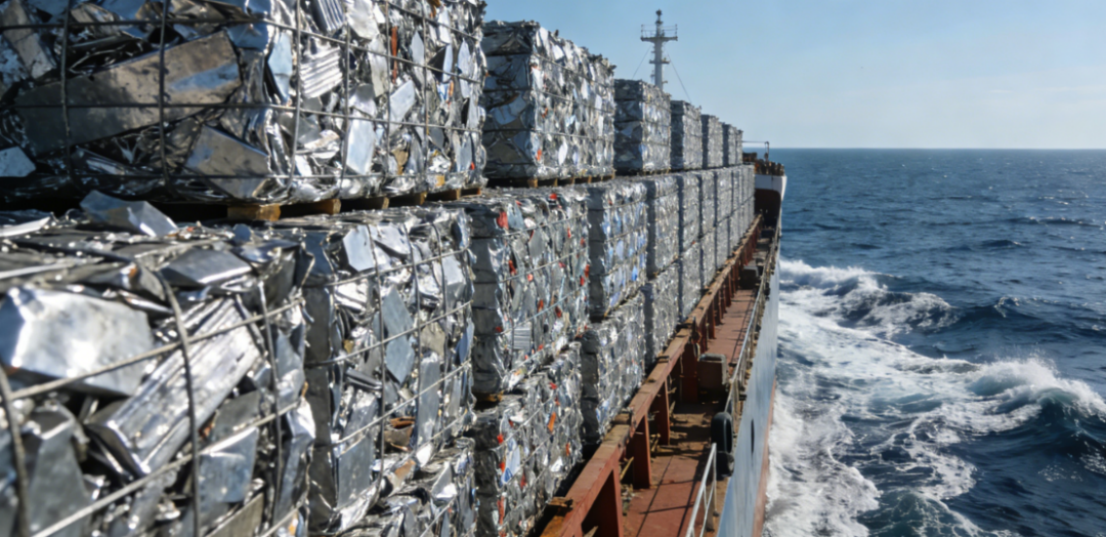
First, accelerate the strategic transformation of process structure from long-flow to short-flow steelmaking. “Enterprises should speed up the elimination of outdated production capacity, improve the recycling rate of scrap steel, and drastically reduce the emission intensity per ton of steel through short-flow steelmaking,” Jiang said.
Second, energy efficiency management must leap from energy conservation of individual equipment to integrated system-level energy efficiency. Traditional energy-saving efforts usually focus on single pieces of equipment such as boilers or fans, while the future direction is to build a plant-wide collaborative energy network using digital technologies. High-efficiency recovery and thermal coupling utilization of blast furnace gas and converter gas will improve waste heat and pressure recovery efficiency, achieving dynamic energy balance across production processes.
In the long run, steel enterprises also need to engage in R&D and reserve of cutting-edge low-carbon technologies such as hydrogen metallurgy and carbon capture, utilization and storage (CCUS). Although these technologies currently face challenges including high investment costs and uncertain returns, they represent an inevitable path to bypass carbon allowance constraints and build long-term core competitiveness.
Enterprises should explore the establishment of a circular mechanism where carbon asset returns feed back into R&D. Profits earned from carbon trading or carbon costs saved should be invested in the research and development of green and low-carbon technologies, forming a virtuous cycle: “technology drives carbon reduction, carbon reduction creates value, and value feeds back into technology”.




Please first Loginlater ~